








Feeding the Empire. Tales of food from Rome and Pompei

The exhibition, organized for the EXPO 2015, talks about food during the Imperial age, when around the Mediterranean basi, took place the first “globalization of consumptions”
On twitter: @museiincomune #Nutrirelimpero
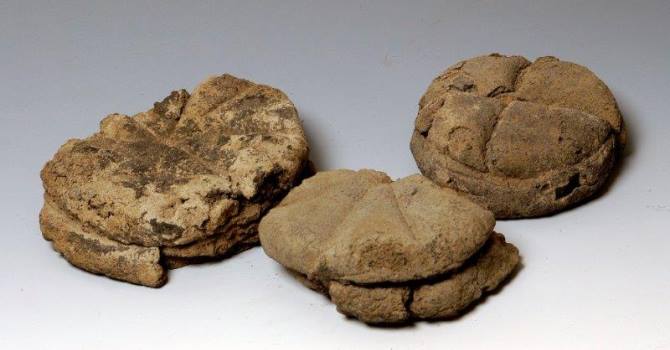
What and how did the ancient Romans use to eat? How did they use to carry hundreds of tons of supplies from the world’s most remote corners? How could they make them go back from the Tiber to the heart of the city? And how could they keep them during all the year? The answer is given by the exhibition “Nutrire l’Impero. Storie di alimentazione da Roma a Pompei”which gives us an image on how the Romans used to eat by the finding of the rare and prestigious archeological finds, the models, the multimedia devices as well as the reconstructions.
After the Pax Romana, around the Mediterranean basin began the “globalization of consumptions” with the “delocalization of production” of raw materials. During the Imperial age the Romans used to drink a lot of wine made in Gallia, Crete and Cyprus. The rich people used to drink the expensive wines made in Campania; they used the oil coming by the sea from Andalusia; they loved the greek honey and especially the garum, a dressing coming from Africa, from the eastern mediterranean area, from the remote Portugal, but also by the near Pompei. But especially the bread they used to eat every day was a product imported, made with the grain coming on big boats form Africa and Egypt.
The exhibition shows us all the different solutions adopted by the Romans for the food suppliesand distribution by using land transports but especially the sea transport. In addition to these subjects the exhibition faces the “massive distribution” and the food consumption among the different social classes in two symobolic places: Rome, the largest and most overcrowded ancient town, and the Vesuvius area, with particular attention to Pompei, Ercolanum and Oplontis, All reach places of Campania.
Multimedia reconstructions and catalogue: Bretschneider’s herm
Catalogo
Gallery


179575

180707